Google Search Ads in 2026: What you need to know
23 March 20262026 is well underway, and it seems AI has no interest in slowing down. Almost everywhere you look, AI has some part to play, promising to deliver that ever-elusive solution to all of life’s problems.
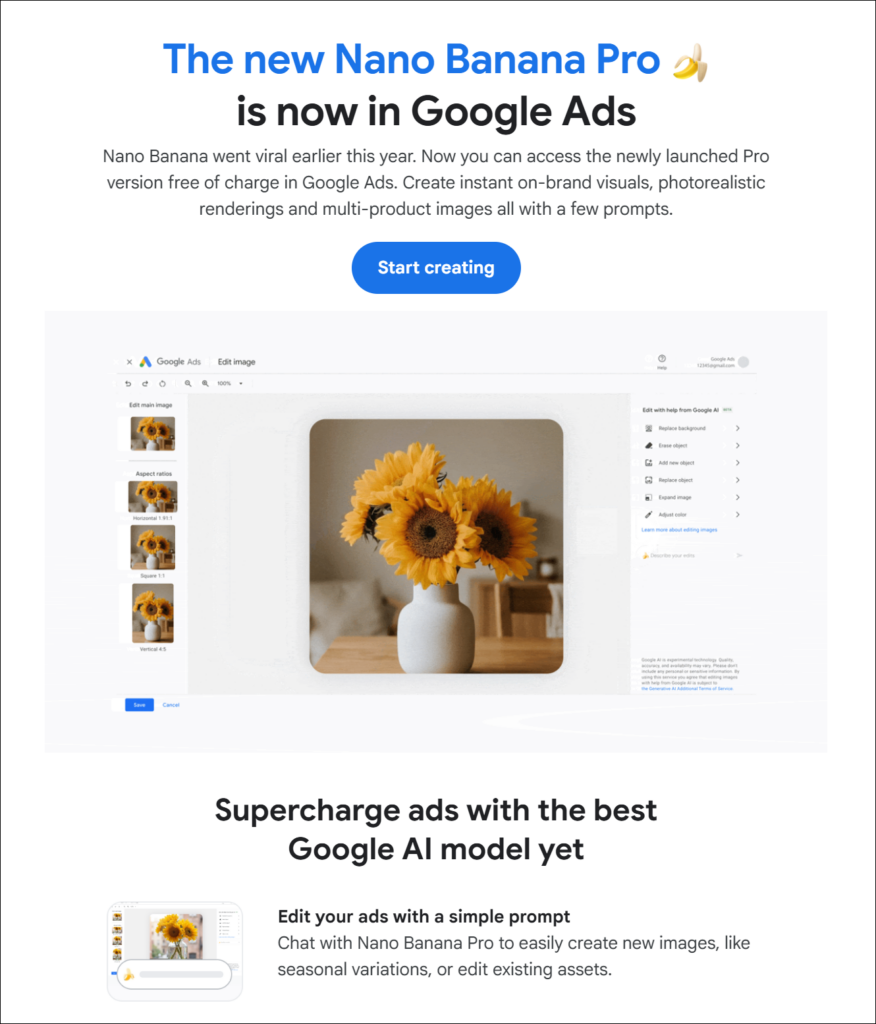
Google Ads is no different. Only a few days ago, Google announced that its AI image generation Nano Banana Pro is now fully integrated within Google Ads, allowing almost instant image generation with almost zero human thought.
But with so much AI hype, it’s easy to lose track of core fundamentals, chasing gimmicks and instant gratification at the expense of control, sustainability, and long-term growth.
So what better opportunity to pause, take a step back, and share what I believe are some of the key areas of Google Ads to watch in 2026 and beyond.
1. Beware of smart bidding
In short, despite its promises, Google Ads smart bidding will not deliver optimum performance and ROI.
Instead of finding you the cheapest conversions possible, in reality what happens is an indirect transfer of your profit data to Google, allowing first-degree price discrimination and a squeezing of your profit margins until your campaigns eventually settle close to break-even. At that point, Google’s profits have been maximised, while your profits have been eroded.
I explore this concept in detail in an article I wrote last week, which explains how the dynamics of smart bidding will always cause your cost per conversion to converge towards the maximum amount you’re willing to tolerate. Smart bidding is incredibly smart, but not in the way you realise.
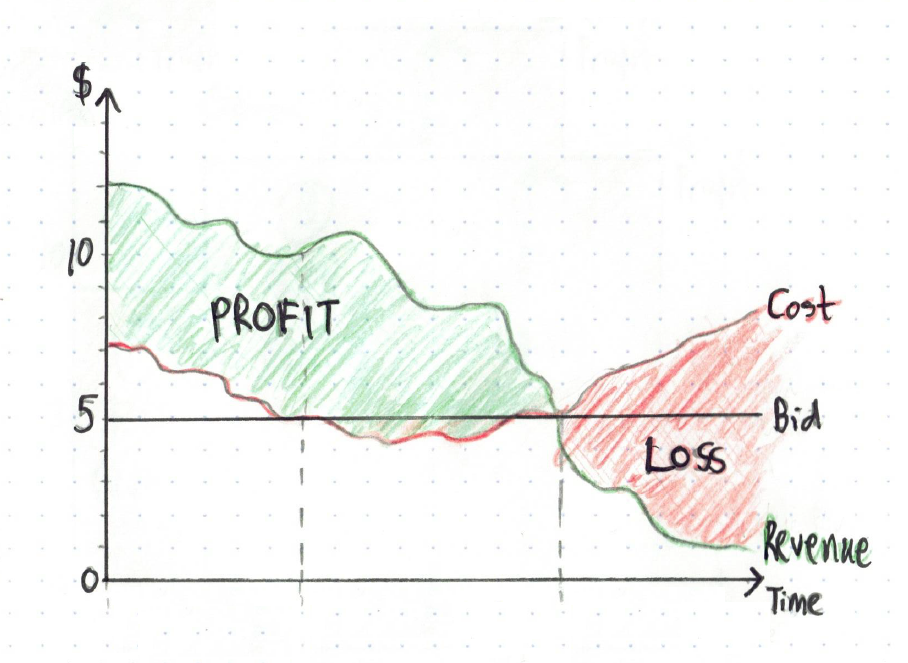
In my smart bidding article suggest three practical solutions (manual bidding, long-tail keywords, offline sales analysis), all of which provides more leverage and control over your campaigns, and allow long-term, sustainable profit from Google Ads. Definately worth a read if you’re currently using smart bidding in your Google Ads campaigns.
2. Beware of close-variant matching
Search queries are the raw phrases typed into Google, and seeing this data allows businesses advertising on Google to verify the quality and relevance of visitors to their website. However in September 2020, Google started hiding approximately 50% of search query data from Google Ads reports, instead labelling them as ‘other search terms’.
In the same month, Google changed it’s keyword match type algorithm, allowing a broader range of search queries to be matched to each keyword, even on exact match (the most strict of keyword matching options). This opened the flood-gates to a barrage of low-quality traffic from Google Ads, often with significantly lower conversion rates.
Unfortunately, there is no way to opt-out of these ‘other search terms’, but with a highly-granular Google Ads campaign structure, it’s possible to use campaign-level funnelling negatives to distribute clicks over a larger number of ad groups to regain a large amount of control of the search queries which match to each keyword.
Since long-tail campaigns provide more data points for analysis, a long-tail strategy also allows keyword bids to be set according to conversion performance, without cannibalising other keywords in your campaigns, ultimately leading to lower click costs and higher return on investment.
One proactive method to achieve this is crawling through Google Autocomplete (the search suggestions which appear on Google search when you start typing a phrase), as this helps to forecast the risk profile of different keyword themes in advance, allowing a huge list of irrelevant keyword themes to be proactively excluded from your campaigns as negatives even before your ads go live. Without such analysis, your ads could be matching 1,000s of irrelevant searches, and since Google does not share search query data for marginally-relevant searches, you could be wasting $1,000s on these low-quality searches every month and be none the wiser.
3. Beware of AI messaging
AI has disrupted many fields throughout 2025 and 2026, including marketing. Yet truly effective marketing communication remains as elusive as ever.
At its core, marketing is the process of connecting with other human beings, and involves complex psychology and decision-making across functional, emotional, and social reasoning methods.
It’s rarely a case of ‘hacking the system’ to get the highest possible click through rate, and more a case of ensuring ads are human-centric, fit for purpose, and consistent with wider business objectives. If left to it’s own devices, AI will always converge towards an ‘optimum’ singularity, which in Google Ads terms, usually means a single ‘optimum’ ad message which enourages the most people to click, often at the expense of relevancy, qualification, and engagement.
In order words: more clicks, more cost, less sales.
Customers don’t care that the image you created was generated in seconds rather than hours using the latest version of Nano Banana Pro. Speed of image creation rarely increases sales. What customers instead care about is relevance, value, and connection. The same things they’ve always cared about.
Effective ads which truly connect with your target audience in a manner which achieves your business goals still require deep-thought, consideration, and multiple rounds of human iteration, taking into account multiple complex business goals to intergrate with a wider marketing strategy.
4. Beware of Performance Max
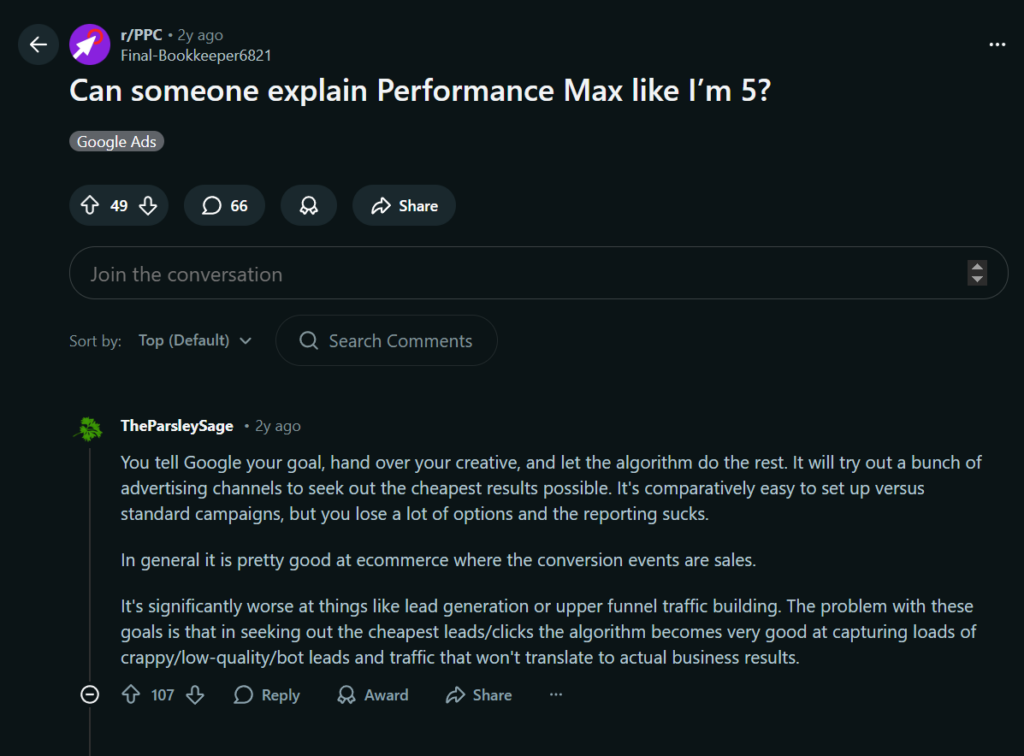
Performance Max gives Google full control of your keywords, images, targeting, audiences, bids, budgets, and messaging, with the promise that Google’s AI will optimise your campaigns to deliver maximum possible value.
In reality, for everything except high-volume consumer ecommerce, Performance Max performs significantly worse than manual campaigns. And combined with the pitfalls of smart bidding I mentioned earlier, no lead-generation business should be using Performance Max in 2026.
Conclusion
Despite AI allowing niche tasks such as coding to be heavily automated, in the wider world of marketing, AI is not the holy grail of campaign success it promises to be.
The best practice Google Ads strategy for 2026 is not AI-generated Google Ads campaigns, but rather deep-thought, research and strategy combined with long-tail campaigns, granular measurement, and intelligent optimisation.
The core fundamentals of Google Ads remain unchanged in 2026, as they have for the last 18 years. Customers still want relevance, value, and connection, and it appears AI won’t take this away anytime soon.
Free 60-Minute Consultation
If you’re an Australian business and keen to explore best practice Google Ads strategies to increase your sales, revenue, and return on investment, please get in touch today for a free 60-minute consultation.